
Earth-like Planet May Have Moons Capable of Hosting Life
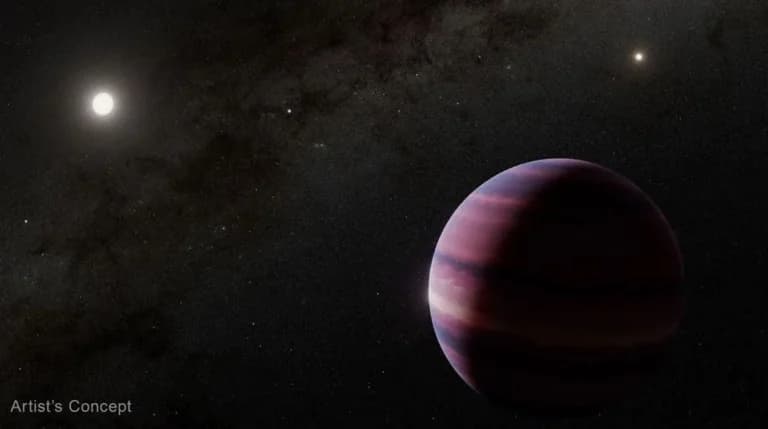
A planet in the Alpha Centauri star system, located in our 'neighborhood,' has similarities to our Sun and potentially habitable moons. The discovery was made with the James Webb Space Telescope.
Scientists have identified evidence of a giant gas planet 4.5 light-years away. Although the planet itself is lifeless, its moons could potentially support life.
Dr. Carly Howett, Associate Professor at the University of Oxford, emphasized the similarities between the exoplanet's star and our Sun, stating that it has approximately the same temperature and brightness, which is important for the existence of habitable worlds.
The planet is similar to Saturn and Jupiter, enveloped in a thick cloud of gas. It was detected in August 2024 but then appeared to disappear, possibly due to its position behind the star.
Astronomers plan to use NASA's Grace Roman Space Telescope, expected to be operational in 2027, to confirm the planet's existence and study its composition through spectral imaging.