
Rum-Preserved Fish Reveal a Century of Environmental Change
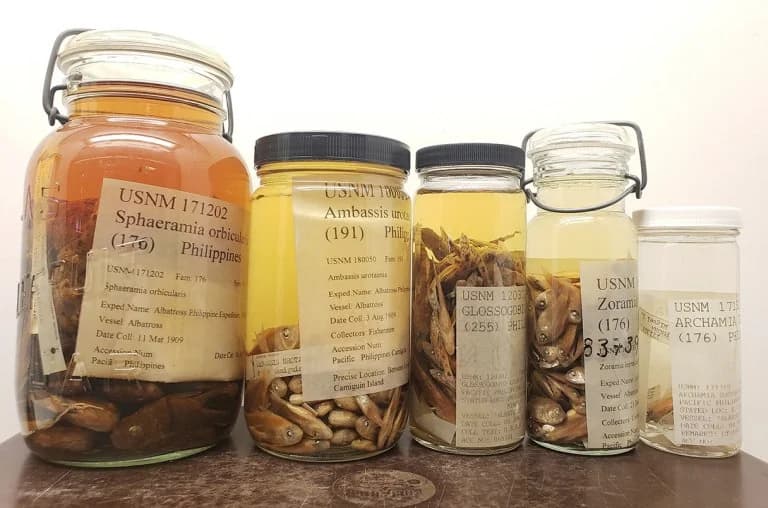
Fish samples collected in 1907 reveal the impact of pollution and overfishing on biodiversity.
In 1907, the USS Albatross began a research mission to the Philippines, collecting 79,000 fish samples, including 117 new species. The samples, stored at the Smithsonian, show changes in marine biodiversity due to intensive fishing and pollution.
Genetic analyses showed that the gene pool of important species has narrowed, reducing the ability to adapt to new conditions. Malin Pinsky emphasized the reduced ability to adapt due to the loss of genetic diversity.
The research began in 2017, collecting fresh fish samples from the same areas. Genetic comparison was possible because the fish had been preserved in rum instead of formalin.
A study in bioRxiv examined the species *Equulites laterofenestra* and *Gazza minuta*, finding a 6% reduction in genetic diversity over the past century, possibly due to pollution and overfishing.
A second study in The American Naturalist examined the species *Taeniamia zosterophora*, finding a 4% reduction in the gene pool in the Cebu Strait. 4% of the genetic markers show evidence of evolutionary pressures.
Researchers have sequenced approximately 5,000 genomes of 39 species, and new findings are expected.