
Manos Hatzidakis: A Rock Revolutionary of Music?
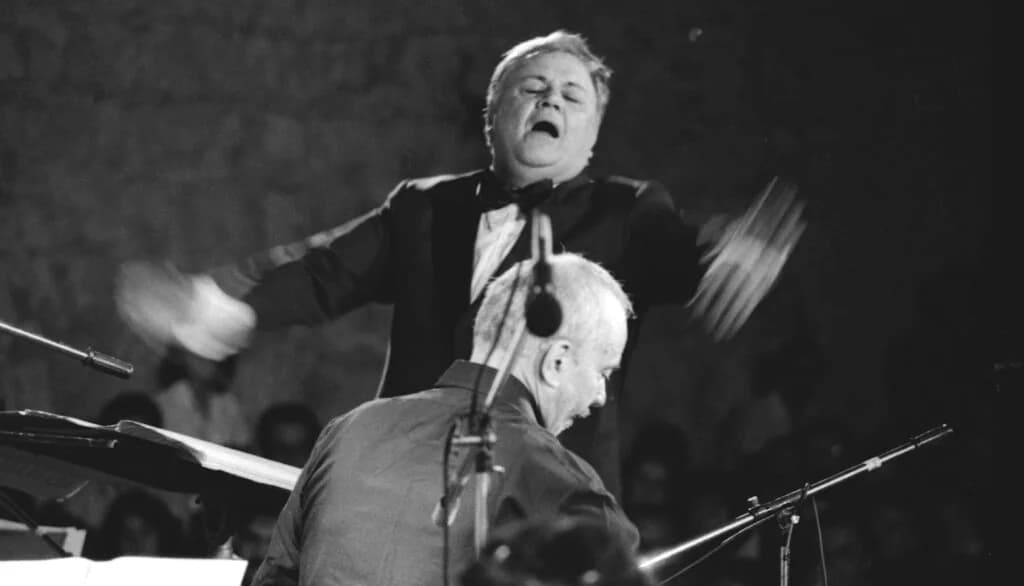
On the 100th anniversary of his birth, we ask: how rock was Manos Hatzidakis? The composer, born in Xanthi on October 23, 1925, didn't need guitars or dependencies to bring about revolution. Instead, he used scores and melodies.
Hatzidakis considered beauty as revolution and proved that changing the world can be achieved with simple, pure melodies. His lifestyle was quiet but rebellious.
In 1949, at the age of 26, he spoke at the Athens Conservatory about rebetiko, exalting it as "honest, authentic and deeply Greek." He was a talented outsider, an "Asimos before Asimos."
Although "Never on Sunday" won him an Oscar, he remained humble, continuing to write music for people and deeper thoughts. During the dictatorship, on the Third Program, he raised quality as resistance.
Hatzidakis clashed with ease and supposed emotionalism, believing that "ugliness is not an aesthetic concept, it is moral." His music was both classical and folk, speaking on the street and in large concert halls. "The Great Erotic" is considered his rock opera.
Manos Hatzidakis lived without ever pretending, honoring the dignity and judgment of the child and the poet. His phrase "We live in an era where people are afraid to be kind" remains relevant.